LP & HP Boiler Dosing System
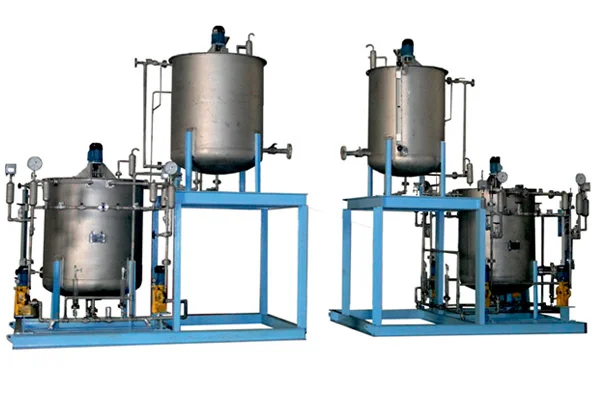
LP & HP Boiler Dosing Systems maintain boiler feedwater quality by precisely dosing treatment chemicals to control scaling, corrosion and fouling. They help protect boiler components, maintain efficient heat transfer and support reliable operation.
Datgur Engineering provides precision engineered LP & HP Boiler Dosing Systems with metering pumps, sensors and automated controls for accurate, consistent chemical dosing. Our solutions reduce manual intervention, optimise chemical consumption and provide reliable boiler water treatment.
 lp
What is an LP and HP Boiler Dosing System?
An LP (Low-Pressure) and HP (High-Pressure) Boiler Dosing System is used to inject precise quantities of treatment chemicals into boiler feedwater. It helps control scale, corrosion, fouling and other water-quality issues that can affect boiler performance and equipment life.
The dosing requirements differ based on boiler pressure and operating conditions, so accurate chemical dosing is essential. These systems use controlled dosing equipment to maintain the required water chemistry, support efficient heat transfer and ensure reliable boiler operation.
System Advantages
1. Key System Components
- Chemical Storage Tanks: Dedicated containment for oxygen scavengers, pH adjusters, and inhibitors.
- Precision Metering Pumps: High-accuracy pumps to control the exact flow of treatment chemicals.
- Advanced Control Panel: Automates dosing rates based on real-time water quality data.
- Analytical Sensors: Monitoring pH, Conductivity, and ORP to optimize chemical consumption.
- Injection Quills: Specialized hardware for safe chemical dispersion into high-pressure feedwater lines.
2. What chemicals are used in LP and HP dosing systems?
- Oxygen Scavengers: Remove dissolved oxygen to prevent corrosion and pitting.
- Alkalinity Agents: Maintain the right pH level to reduce acidic corrosion in the boiler.
- Scale Inhibitors: Prevent mineral deposits and scale buildup on heat transfer surfaces.
- Phosphate Treatment: Form a protective layer to stop hardness related deposits.
- Amine Compounds: Prevent condensate return lines from corrosion by controlling pH levels.
3. How does the chemical Dosing System operate?
- Continuous Quality Monitoring: Sensors continuously track feedwater chemistry in real time.
- Flow-Proportional Dosing: Chemical injection rates are adjusted according to changing boiler loads.
- Multi-Stage Injection: Dosing is customised for both LP (Low Pressure) and HP (High Pressure) sections.
- Automated Feedback Loop: The system makes real-time adjustments based on post-dosing water quality analysis.
4. What Are The Requirements For LP and HP Boilers?
- Low-Pressure (LP) Systems: Require basic oxygen scavenging and pH control for moderate operating conditions.
- High-Pressure (HP) Systems: Require precise phosphate and inhibitor control to minimise carryover.
- Safety & Reliability: Automated dosing reduces manual chemical handling and human error.
5. Which Industries Use These Systems?
- Power Generation: High-pressure boilers require precise chemical control to protect turbines.
- Chemical Processing: Dosing manages varying steam loads and process requirements.
- Food & Pharma: High steam purity helps prevent product contamination.
- District Heating: Chemical treatment helps prevent scaling and efficiency losses in large HVAC networks.
Technical Matrix
| Parameter | Specification |
|---|---|
| Pump Type | Hydraulic or Mechanical Diaphragm |
| Pressure Rating | Up to 200 Bar (for HP Boilers) |
| Tank Material of Construction | HDPE / SS316L / Fiberglass |
| Automation | PLC with SCADA Connectivity |
| Sensors | pH, Conductivity, DO, ORP |
| Compliance | ASME & Boiler Safety Standards |
Technical
FAQ
Expert insights on installation, maintenance, and performance optimization for your LP & HP Boiler Dosing System.
Related Products
Explore More Specialized Technical Modules
Dosing Systems
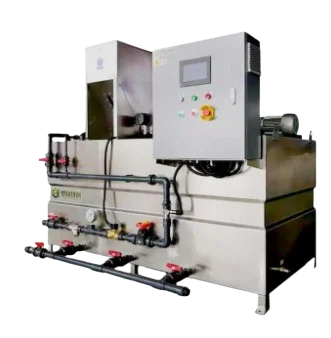
Automatic Flocculant Dosing System
Dosing Systems
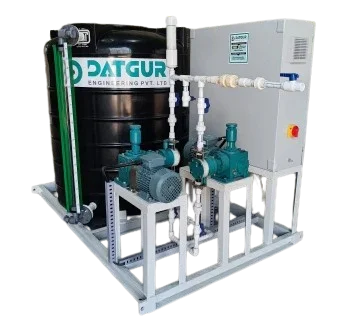
IoT-Based Automatic Dosing System
Dosing Systems
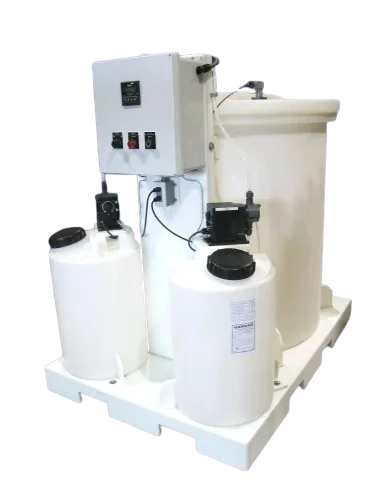
pH Correction Auto Dosing System
Dosing Systems
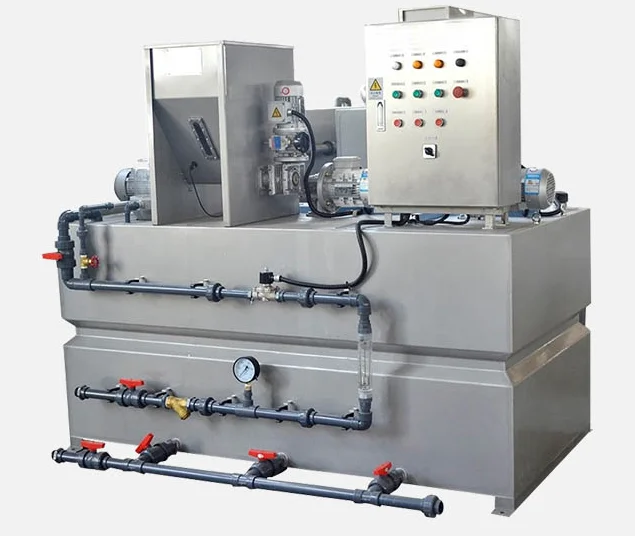
Fully Automatic Polymer Dosing System

Dosing Systems
Dosing Systems for Oil & Gas
Dosing Systems
Automatic Flocculant Dosing System
Dosing Systems
IoT-Based Automatic Dosing System
Dosing Systems
pH Correction Auto Dosing System
Dosing Systems
Fully Automatic Polymer Dosing System
Dosing Systems