
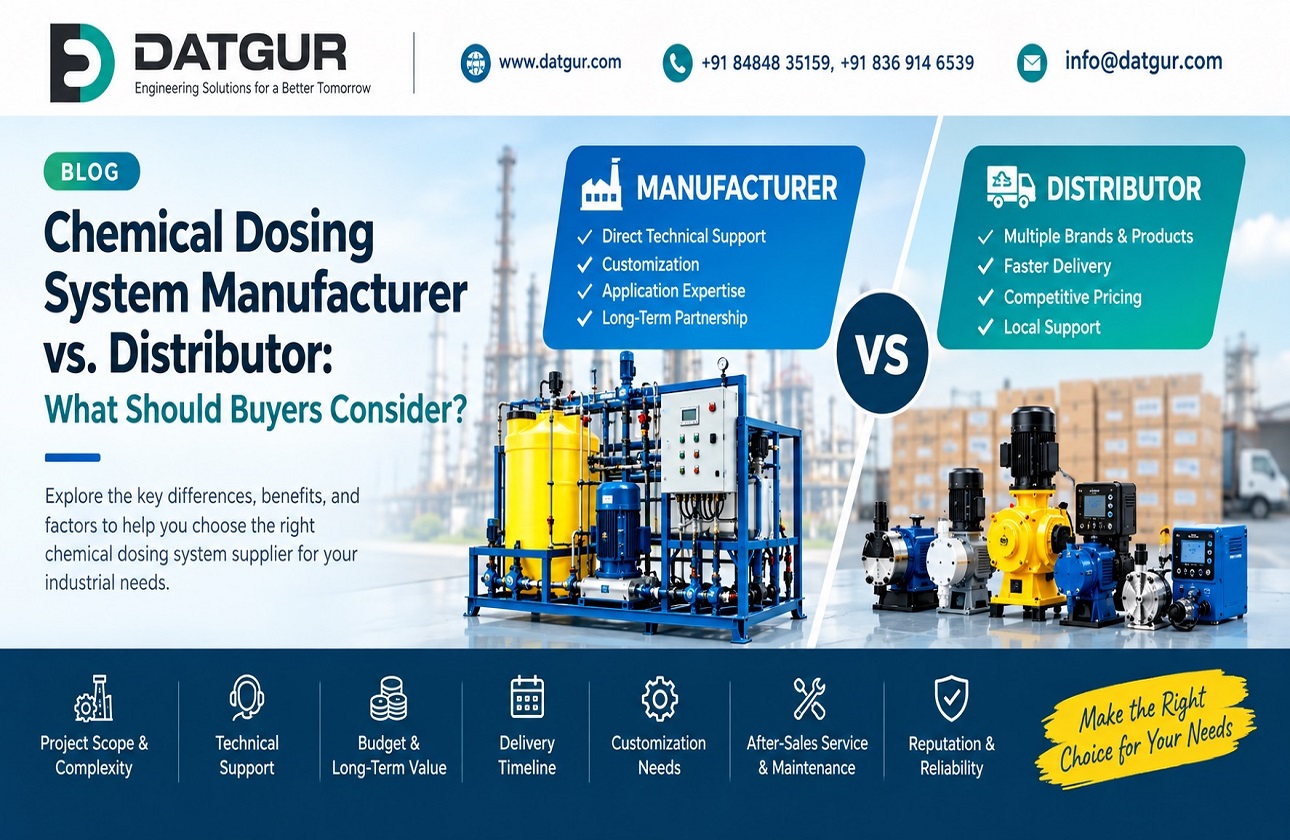
Choosing the right chemical dosing system supplier is essential for industries such as Oil & Gas, water treatment, chemical processing, and power generation. Buyers often face a key question: should they purchase directly from a chemical dosing system manufacturer or through a dosing system distributor?
Manufacturers may offer direct engineering support and customization, while distributors may provide multiple brands, competitive pricing, and faster access to stocked products. The right choice depends on your technical requirements, budget, delivery timeline, and long-term maintenance needs.
This guide explains the differences and helps you choose the right supplier for your industrial application.
What Is a Chemical Dosing System?
A chemical dosing system delivers controlled quantities of chemicals into pipelines, tanks, or industrial processes. It may include a chemical metering pump, storage tank, valves, piping, instrumentation, and a control panel.
These systems are widely used for corrosion inhibitor injection, scale prevention, water treatment, polymer preparation, and other industrial processes where accurate chemical delivery is important.
Understanding Chemical Dosing System Manufacturers
A manufacturer designs, produces, assembles, or engineers dosing equipment and packages according to specific requirements.
Advantages of Buying from a Manufacturer
1. Direct Technical Support
Working directly with a manufacturer allows buyers to discuss flow rates, operating pressure, chemical compatibility, and equipment specifications with the technical team. This can be particularly valuable for complex Oil & Gas and industrial applications.
2. Customization Options
Manufacturers with suitable engineering capabilities may customize dosing systems according to chemical properties, operating conditions, materials, instrumentation, automation, and installation requirements. Customized skid-mounted chemical injection packages may be appropriate for projects requiring specific configurations.
3. Application Expertise
An experienced dosing pump manufacturer can help evaluate technical requirements and recommend suitable equipment. Buyers may also obtain product datasheets, drawings, operating manuals, and maintenance documentation directly from the original supplier.
4. After-Sales Support
Depending on the manufacturer's service capabilities, buyers may receive troubleshooting assistance, spare-parts support, maintenance guidance, and commissioning services.
Potential Disadvantages
Customized systems may require longer manufacturing and testing periods. Some manufacturers also have minimum order quantities or specialize in a limited product range. Buyers should confirm delivery schedules, customization capabilities, and service commitments before placing an order.
Understanding Chemical Dosing System Distributors
A distributor supplies products from one or more equipment manufacturers. Some focus on standard dosing pumps, while others provide engineering assistance, system integration, and maintenance services.
Advantages of Buying from a Distributor
1. Multiple Brands and Products
A distributor may offer different chemical metering pumps and accessories, making it easier to compare product specifications and available options.
2. Potentially Faster Delivery
Distributors with local inventory may supply standard pumps and spare parts quickly. However, availability depends on actual stock and product requirements.
3. Competitive Pricing
Established distributors may offer competitive prices through supplier relationships, bulk purchasing, or consolidated procurement.
4. Local Service and Convenience
Some distributors provide local technical assistance, spare parts, and service coordination, which can help reduce equipment downtime.
Potential Disadvantages
Distributors may offer limited customization for specialized applications. Technical support may depend on the original manufacturer, and products not available in stock could require additional lead time. Buyers should also clarify who handles warranty claims, commissioning, and repairs.
Manufacturer vs. Distributor: Key Differences
| Factor | Manufacturer | Distributor |
|---|---|---|
| Product range | Often focused on its own products | May offer multiple brands |
| Customization | Potentially greater | Depends on integration capabilities |
| Technical support | Direct engineering access may be available | Depends on distributor expertise |
| Delivery | Customized products may take longer | Stocked products may ship faster |
| Pricing | Depends on specifications and scope | May offer competitive options |
| After-sales service | Depends on service network | Depends on service arrangements |
Seven Factors to Consider When Choosing a Supplier
1. Project Scope and Complexity
Standard pump replacements may be suitable for distributor procurement. Complex chemical injection systems requiring customized skids, instrumentation, or automation may benefit from a manufacturer or experienced system integrator.
2. Technical Support
Confirm whether the supplier can assist with pump selection, chemical compatibility, technical drawings, installation, commissioning, and troubleshooting.
3. Budget and Long-Term Value
Compare more than the initial purchase price. Consider installation, shipping, spare parts, maintenance, energy consumption, and potential downtime. Request itemized quotations with equivalent specifications.
4. Delivery Timeline
For urgent replacements, confirm stock availability and dispatch dates. For customized equipment, review engineering, manufacturing, inspection, and delivery schedules.
5. Customization Requirements
Evaluate whether your application requires specific flow rates, pressure ratings, materials, controls, or hazardous-area provisions. Confirm who is responsible for engineering and performance verification.
6. After-Sales Service
Check warranty conditions, spare-parts availability, service coverage, maintenance support, and technical response times. Reliable support is particularly important for continuous industrial operations.
7. Reputation and Reliability
Review relevant industry experience, customer references, quality procedures, technical documentation, and delivery commitments. Request written confirmation of the supplier's responsibilities.
Manufacturer or Distributor: Which Is Right for You?
Choose a manufacturer when you need customized equipment, direct engineering coordination, or a project-specific dosing package.
Choose a distributor when you need standard products, multiple-brand comparisons, locally stocked equipment, or urgent replacement parts.
An experienced distributor or system integrator may also provide complete engineered solutions. Focus on the supplier's actual capabilities rather than its business category alone.
Conclusion
Choosing between a chemical dosing system manufacturer and distributor requires careful evaluation of technical requirements, customization, pricing, delivery, and after-sales support. Manufacturers may be suitable for complex projects, while distributors can be convenient for standard equipment and urgent requirements.
Looking for the Right Chemical Dosing System for Your Application?
Whether you need a standard chemical metering pump or a customized industrial dosing solution, Datgur Engineering can help you explore options based on your project requirements.
Contact our team to discuss your application, technical specifications, and dosing system requirements.
Request a Quote Today!
🌐 Website: https://www.datgur.com/
📞 Call: +91 84848 35159 / +91 836 914 6539
✉️ Email: info@datgur.com
Frequently Asked Questions
1. What is the difference between a chemical dosing system manufacturer and a distributor?
A chemical dosing system manufacturer designs, produces, or assembles dosing equipment and may offer customization and direct engineering support. A distributor supplies products from one or more manufacturers and may provide multiple brands, stocked products, and local service support.
2. Is it better to buy a chemical dosing system directly from a manufacturer?
Buying directly from a manufacturer can be beneficial when you need customized equipment, application-specific engineering, or direct technical support. However, the best option depends on pricing, delivery time, product availability, and after-sales service.
3. How do I choose the right chemical dosing system supplier?
Evaluate the supplier's technical expertise, product quality, customization capabilities, pricing, delivery schedule, warranty, spare-parts availability, and experience with your industry. Request a detailed quotation based on your application requirements.
4. Can a dosing system distributor provide customized chemical injection systems?
Yes, some distributors offer customized chemical injection packages through their own engineering teams or partnerships with manufacturers. Before purchasing, confirm their design capabilities, testing procedures, technical support, and warranty responsibilities.
5. What information is required to get a chemical dosing system quotation?
Typically, suppliers require the chemical name and properties, required dosing flow rate, operating pressure, temperature, material requirements, control specifications, installation conditions, and delivery timeline. Providing accurate information helps them recommend a suitable solution and prepare a detailed quotation.