
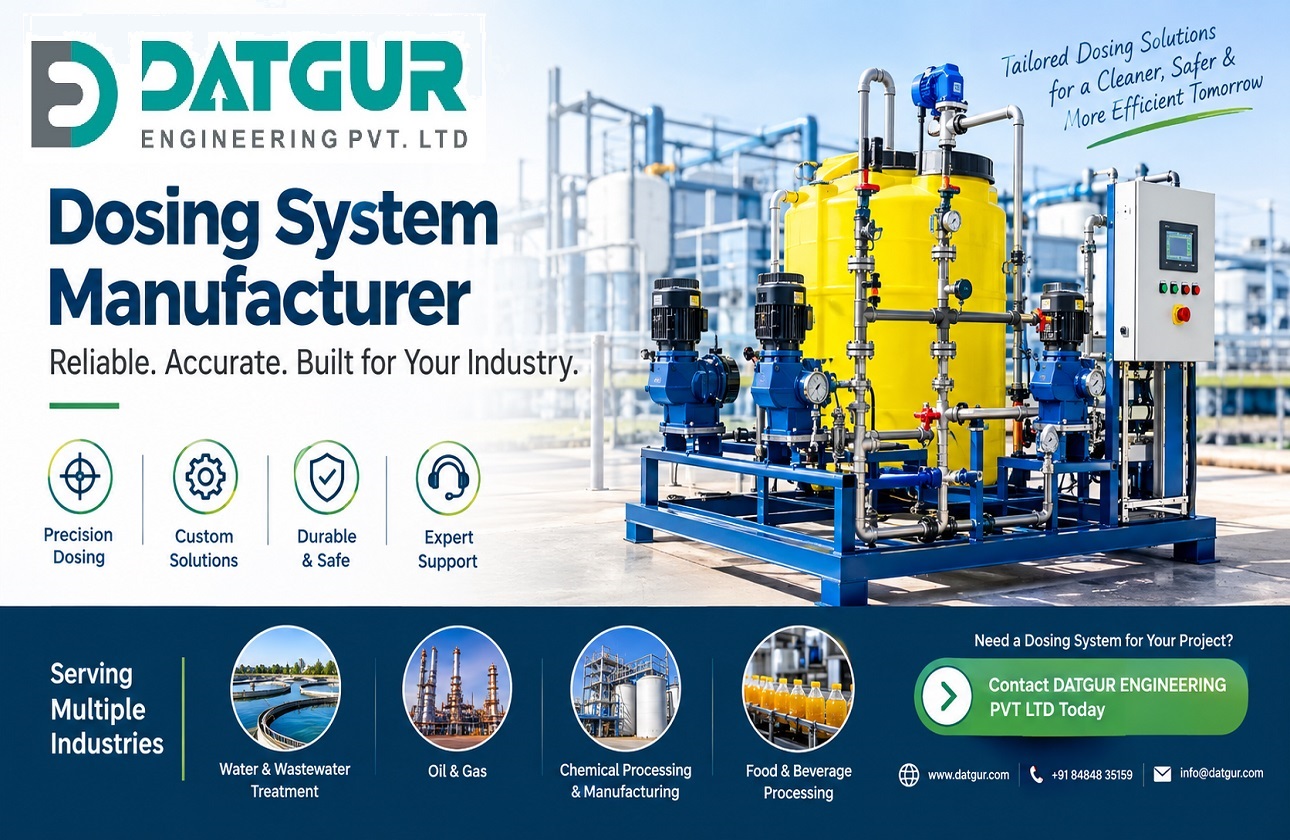
Accurate chemical dosing is essential for maintaining process efficiency, product quality, operational safety, and regulatory compliance across industrial applications. From water treatment plants and oil and gas facilities to chemical processing units and manufacturing industries, dosing systems deliver controlled quantities of liquids or chemicals into a process at specified flow rates and pressures.
Choosing the right dosing system manufacturer is therefore an important decision for industrial buyers, project engineers, EPC contractors, and procurement managers. A well-designed dosing system helps maintain consistent process conditions, minimize chemical wastage, reduce manual intervention, and improve equipment reliability.
Datgur Engineering Pvt. Ltd. provides industrial engineering solutions for dosing applications, including dosing systems, dosing pumps, chemical injection packages, polymer dosing systems, and associated equipment. Selecting a suitable solution begins with understanding your process requirements, equipment specifications, and long-term operating objectives.
What Is an Industrial Dosing System?
An industrial dosing system is an engineered arrangement of equipment designed to deliver a controlled quantity of liquid, chemical, or additive into a process stream, tank, or treatment unit.
Depending on the application, a typical chemical dosing system may include:
- Dosing pump: Delivers a controlled flow of liquid or chemical.
- Chemical storage tank: Stores the process chemical under suitable conditions.
- Piping and injection assembly: Transfers and introduces the chemical into the process.
- Valves and pressure protection: Help regulate flow and protect the system against specified operating risks.
- Instrumentation: Flow meters, pressure gauges, level switches, and other monitoring devices.
- Control panel: Enables manual or automated operation, including integration with plant control systems where required.
The final configuration depends on chemical properties, required dosing accuracy, operating pressure, flow rate, environmental conditions, and process requirements.
Why Choosing the Right Dosing System Manufacturer Matters?
An industrial dosing system must perform reliably under actual operating conditions, not merely meet the initial purchase specification. An experienced manufacturer considers the complete application before recommending equipment.
1. Accurate and Consistent Chemical Dosing
Incorrect chemical dosage can affect water quality, product consistency, process efficiency, and downstream equipment. Precision dosing equipment should be selected according to the required flow range, pressure, chemical characteristics, and control requirements.
For example, water treatment applications may require controlled dosing of disinfectants, pH-adjustment chemicals, or coagulants. The appropriate pump and control strategy help maintain the intended treatment conditions.
2. Chemical Compatibility and Material Selection
The wetted components of a dosing system must be compatible with the chemical being handled. Engineers should assess concentration, temperature, viscosity, corrosiveness, and any solids present.
Depending on the application, materials such as stainless steel, PVC, PVDF, PTFE, or other compatible materials may be considered. The correct selection depends on verified chemical compatibility and operating conditions rather than material cost alone.
3. Operational Safety and Reliability
Industrial chemical injection systems may operate under high pressure or handle hazardous fluids. Appropriate pressure-relief arrangements, isolation valves, leak prevention measures, instrumentation, and safe maintenance access are important design considerations.
For demanding oil and gas or chemical processing applications, equipment specifications should also address applicable project standards, hazardous-area requirements, and testing documentation.
4. Lower Lifecycle Costs
A low initial purchase price does not always result in lower operating costs. Pump wear, seal failures, calibration requirements, chemical wastage, energy consumption, and unplanned downtime can increase the total cost of ownership.
A reliable dosing system supplier evaluates maintainability, spare-parts availability, service support, and expected operating conditions alongside the initial equipment price.
Key Factors to Consider When Selecting a Dosing System
Before purchasing a dosing system, industrial buyers should evaluate several technical parameters.
Required Flow Rate and Operating Pressure
Determine the minimum, normal, and maximum dosing flow rates, along with the discharge pressure required to overcome process-line pressure and system losses. The selected pump should operate reliably across the required range without excessive oversizing.
Pump Technology
Common dosing pump technologies include:
- Diaphragm metering pumps: Suitable for many applications requiring controlled chemical delivery and isolation of the pumped liquid from mechanical drive components.
- Plunger metering pumps: Often used for high-pressure applications, subject to fluid properties and sealing requirements.
- Peristaltic pumps: Useful for certain applications involving shear-sensitive fluids or fluids that benefit from a contained pumping path.
- Other positive-displacement pumps: Selected according to flow, pressure, viscosity, and process requirements.
The appropriate technology depends on the application. A qualified dosing pump manufacturer should assess the operating envelope and required performance before recommending a pump.
Automation and Process Integration
Automated dosing systems can use flow signals, tank-level measurements, pH readings, or other process variables to adjust chemical delivery. Depending on the application, a PLC or compatible control panel may support alarms, interlocks, remote monitoring, and integration with a distributed control system (DCS).
Automation can improve consistency and reduce manual intervention, but its design must account for sensor accuracy, calibration, control logic, and safe operating limits.
Maintenance and Spare Parts
Easy access to pumps, valves, filters, instruments, and other serviceable components simplifies inspection and maintenance. Before purchasing, confirm maintenance requirements, recommended spare parts, documentation, warranty terms, and the availability of technical support.
Applications of Chemical Dosing Systems Across Industries
Industrial dosing solutions support a wide range of sectors.
Water and Wastewater Treatment
Dosing systems deliver disinfectants, coagulants, pH-adjustment chemicals, and treatment additives. Reliable dosing helps maintain process control and achieve the plant's specified treatment objectives.
Oil and Gas
Chemical injection packages can support applications involving corrosion inhibitors, demulsifiers, and other process chemicals. Equipment selection must reflect the required pressure, flow, fluid compatibility, and project specifications.
Chemical Processing and Manufacturing
Liquid dosing systems provide controlled addition of process chemicals, catalysts, additives, and other ingredients where specified quantities are important to process consistency.
Food and Beverage Processing
Dosing equipment can be used for liquid ingredients, cleaning chemicals, and process additives. Applications involving product contact require suitable hygienic design, compatible materials, and applicable food-safety compliance.
Why Choose Datgur Engineering Pvt. Ltd. as Your Dosing System Supplier?
Selecting a manufacturer with relevant industrial product knowledge can simplify equipment selection and procurement. Datgur Engineering Pvt. Ltd. serves industrial dosing requirements through its range of dosing-related products and engineering solutions.
When evaluating Datgur for your project, consider the following areas:
- Industrial dosing equipment: Explore solutions for dosing pumps, dosing systems, chemical injection packages, and polymer dosing applications.
- Application-focused selection: Provide your process conditions and chemical specifications so the appropriate equipment configuration can be evaluated.
- Project-specific requirements: Discuss flow rate, operating pressure, materials of construction, instrumentation, control requirements, and installation constraints.
- Technical coordination: Clarify the required documentation, testing, commissioning responsibilities, maintenance provisions, and after-sales support before finalizing the purchase.
A successful procurement process starts with clear technical specifications and communication between the buyer, engineering team, and supplier. Datgur can be approached to discuss your requirements and determine a suitable dosing solution.
How to Request a Quotation for an Industrial Dosing System?
To help a manufacturer prepare an accurate technical and commercial proposal, share the following information:
- Application: Water treatment, oil and gas, chemical processing, or another industrial process.
- Chemical details: Name, concentration, viscosity, temperature, and relevant safety information.
- Flow requirements: Minimum, normal, and maximum dosing rates.
- Operating pressure: Process pressure, discharge pressure, and relevant design conditions.
- Materials: Required materials of construction and chemical compatibility constraints.
- Controls and instrumentation: Manual or automatic operation, monitoring requirements, and plant-system integration.
- Project requirements: Installation location, applicable standards, documentation, delivery expectations, and service requirements.
Providing this information early helps reduce specification gaps, avoid unsuitable equipment selections, and streamline technical evaluation.
Conclusion: Partner with a Reliable Dosing System Manufacturer
Choosing the right dosing system manufacturer is essential for achieving accurate chemical delivery, reliable operation, safe process handling, and manageable lifecycle costs. From pump selection and material compatibility to instrumentation and automation, every design decision should reflect the actual process requirements.
Whether you are planning a new installation, expanding an existing facility, or replacing outdated equipment, selecting the right industrial dosing solution can improve operational consistency and simplify maintenance.
Looking for a dosing system manufacturer for your next industrial project?
Contact Datgur Engineering Pvt. Ltd. to discuss your application, technical specifications, and equipment requirements.
- Website: www.datgur.com
- Phone: +91 84848 35159 / +91 836 914 6539
- Email: info@datgur.com
Request a quotation and discuss the right dosing solution for your industrial application.
Frequently Asked Questions (FAQs)
1. What does a dosing system manufacturer do?
A dosing system manufacturer designs, supplies, or assembles equipment that delivers controlled quantities of liquids or chemicals into industrial processes. Depending on the scope, the system may include metering pumps, tanks, piping, valves, instrumentation, and control panels. Manufacturers select components based on flow rate, pressure, chemical compatibility, and application requirements.
2. How do I choose the right dosing system manufacturer?
Evaluate the manufacturer's relevant industry experience, product range, engineering capabilities, material compatibility knowledge, quality-control processes, documentation, delivery commitments, and after-sales support. Provide detailed process specifications and compare technical compliance and lifecycle costs rather than selecting a supplier on purchase price alone.
3. What factors determine the cost of an industrial chemical dosing system?
The cost depends on the required flow rate and pressure, pump technology, materials of construction, chemical properties, number of dosing points, instrumentation, automation, safety features, testing requirements, and installation scope. A customized system may cost more initially but can better match the application's operating requirements.
4. What is the difference between a dosing pump and a dosing system?
A dosing pump is an individual component that delivers a controlled quantity of liquid. A dosing system is a complete arrangement that may include one or more pumps, storage tanks, piping, valves, instruments, and controls. The complete system is designed to deliver chemicals safely and consistently within a specific process.
5. Which industries use industrial dosing systems?
Industrial dosing systems are used in water and wastewater treatment, oil and gas, chemical processing, power generation, manufacturing, and food and beverage processing. Typical applications include chemical injection, pH correction, disinfection, polymer preparation, and controlled addition of process ingredients. The equipment configuration depends on the industry, fluid properties, and required operating conditions.